
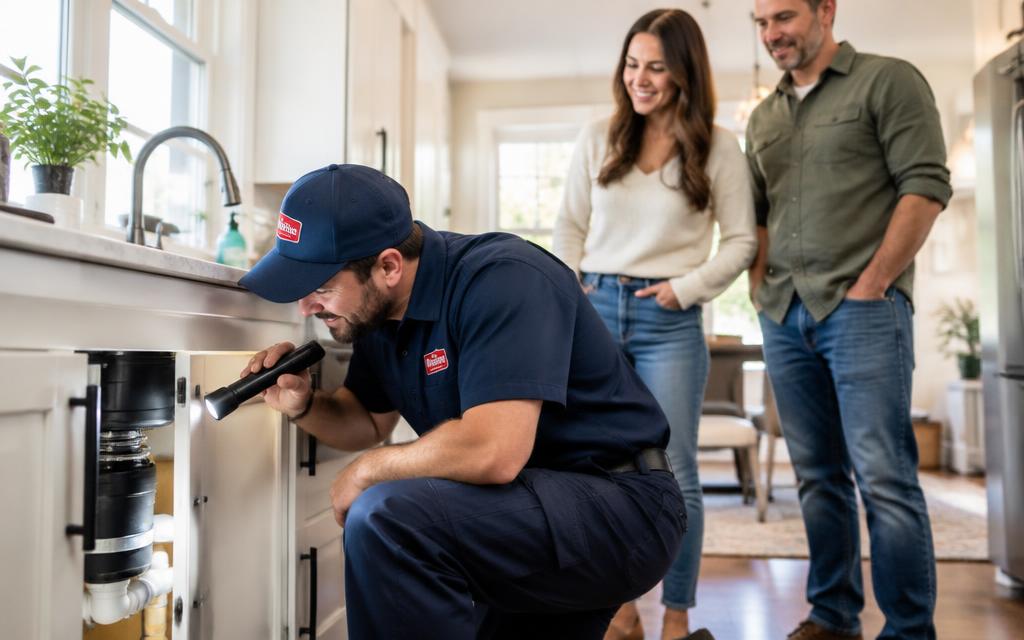
You're already paying for the truck to be in your driveway
Most people call a plumber for one thing — a dripping faucet, a slow drain, a water heater that went cold — and never think past that one fix. That's understandable. You want the problem you can see solved, and you want the plumber gone.
But here's the habit that separates homeowners who get a $200 repair from homeowners who get a $5,000 repair: when the plumber is already standing in your house, ask them to take ten minutes and look at the rest of it. The visit is already scheduled, the truck is already parked, and most small plumbing problems show clear warning signs long before they flood a basement.
At City & County Plumbing and Drain, our plumbers do this on almost every call when we're asked — and it regularly turns up a washing machine hose that's about to burst, a water heater at the end of its life, or a shutoff valve that seized shut years ago. None of those cost much to fix on the spot. All of them are expensive the day they fail on their own.
The 7-point checklist to ask your plumber to run
You don't need to know plumbing to use this list. Just read it to your plumber or hand it over — a good one will be happy to do a quick walk-through. Most of these checks take under two minutes each.
- Under every sink — Ask them to check the shutoff valves and supply lines. These thin hoses are the #1 cause of kitchen and bathroom water damage, and they fail with almost no warning.
- The water heater — Age, rust at the fittings, sediment in the tank, and the temperature setting (120°F is the safe, efficient default). A tank past 10–12 years old should be on your radar.
- Every toilet — Running toilets, wobbling bases, and slow seeps around the base quietly waste water and rot subflooring.
- Washing machine hoses — Bulging, cracked, or original rubber hoses should be replaced with braided stainless steel. This is the single most common cause of flooded laundry rooms.
- The sump pump — Lift the float to confirm it kicks on, and check the discharge line runs clear outside. In St. Louis, this little pump is what stands between your basement and a storm.
- Water pressure and the main shutoff — Pressure should sit around 40–60 psi; too high wears out every valve in the house. And everyone in the home should know where the main shutoff is before an emergency, not during one.
- Visible pipes in the basement or crawlspace — Corrosion, green crust on copper, damp spots on wood, and any leftover galvanized piping that's past its lifespan.
What to actually say to your plumber
You don't need a script, but this one works: "While you're here, can you do a quick look at the rest of the house and tell me anything that's likely to become a problem in the next year?"
Reputable companies won't blink at this. Some will do a courtesy check for free; others charge a modest fee, which is fair — you're asking for their trained eye on every fixture you own. What a good plumber won't do is use the walk-through to invent problems. Ask for the why behind anything they flag: a photo, the age of the part, what happens if you wait six months. Upfront explanations are part of how we price every job.
Red flags you should never sit on
A few findings shouldn't wait for a scheduled follow-up. If your plumber spots any of these, get them fixed before the next season rolls around:
- Water stains or a musty smell anywhere near plumbing — water is already traveling where it shouldn't.
- A water meter that spins while every fixture is off — you have a hidden leak right now.
- Low pressure in just one fixture versus the whole house — these point to very different problems with very different costs.
- A sewer that backs up when it rains heavily — roots or a sagging line, and each heavy rain makes it worse.
- Gas appliance connections with corrosion or a smell of gas — call immediately and stay out of the area.
How often should you do this?
Once a year is the rhythm we recommend for most St. Louis homes — and the easiest moments to remember are right before winter (frozen pipes are our busiest emergency) and after your water heater passes its 10th birthday. It's also worth booking the walk-through when you buy a home, before a basement remodel, and any time your water bill jumps without an obvious reason.
If your plumber finds something during the check that needs a closer look — an older sewer line, a mysterious pressure drop — they'll usually recommend a targeted follow-up like a sewer camera inspection or electronic leak detection, which pinpoints the problem without tearing open walls or floors.
Services mentioned in this article
More from the blog
- Signs Your Sewer Line Needs Repair in St. Louis
- Hydro Jetting vs. Drain Snaking: Which One Does Your Home Need?
- Tank vs. Tankless Water Heaters for St. Louis Homes
- How to Prevent Frozen Pipes in a Missouri Winter
- What Is a Sewer Lateral and Does the St. Louis County Program Cover It?
- Trenchless Pipe Lining vs. Excavation: Costs and Pros & Cons
- What to Do in a Plumbing Emergency Before the Plumber Arrives
- Why Your Basement Floor Drain Backs Up After Heavy Rain in St. Louis